




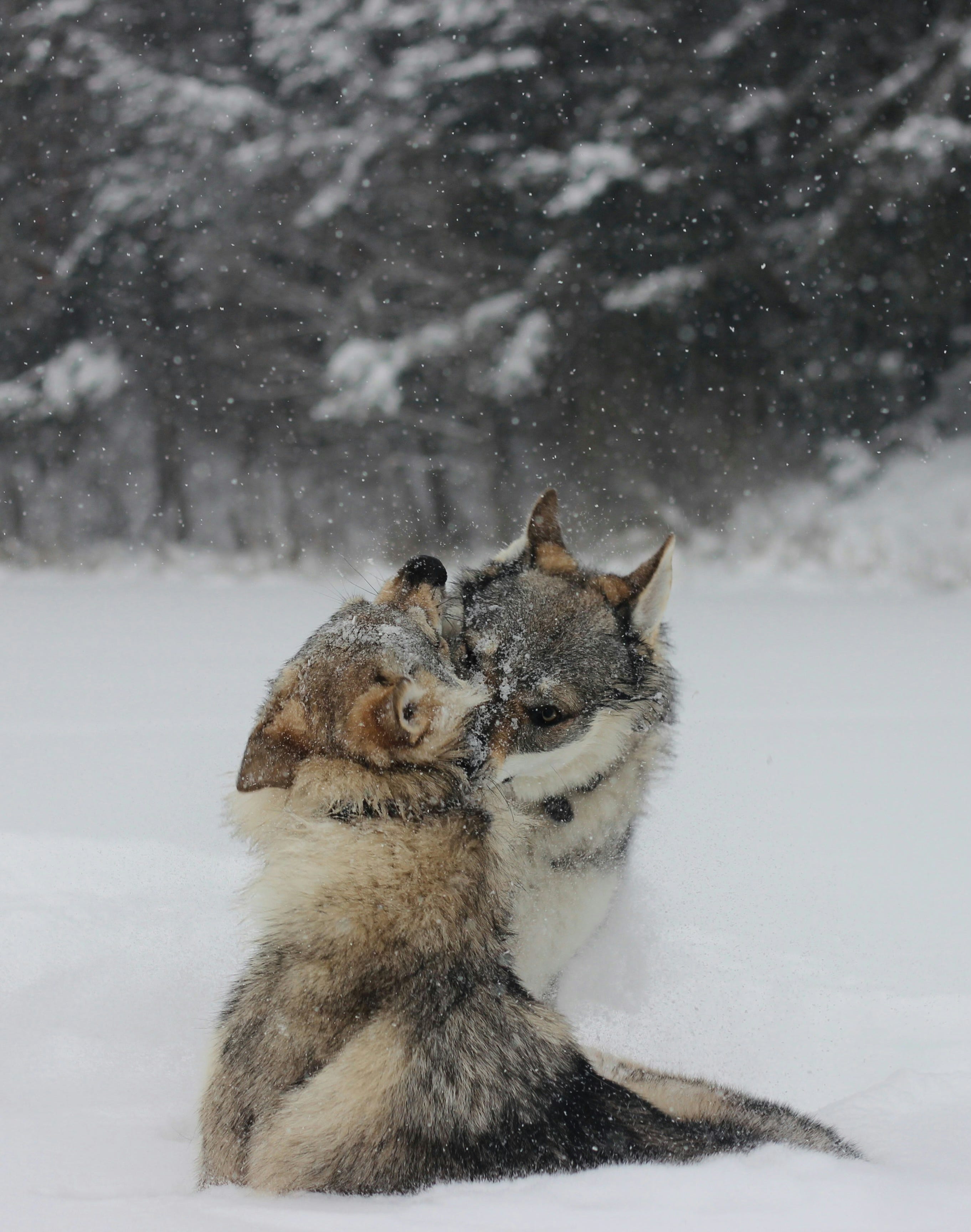
This month’s theme refers to a common parable about two wolves. There are many versions of it, but it generally goes something like this:
A wise man tells his grandchild that two wolves live inside of him, in constant battle. One wolf is bad — mean, greedy, and dangerous. The other wolf is good — wise, kind, and loving. The child asks him which wolf wins, and the man says, “The wolf I feed.”
Everyone I meet seems to be struggling with the same problem — wanting to get rid of some part of themselves — a “bad wolf” or more likely, “bad wolves”. This might be anxiety or fear, or self-criticism, or a belief that they should be more gregarious or stop being so reserved. Generally, they’ve identified these aspects of self as “the problem”, and most have spent a lot of time — sometimes decades — trying to get rid of it or hide it. And you know, sometimes this works — you can mask your worries with bravado or insecurities by success at work or cultivating your appearance, and others might not notice your authentic struggles. But this doesn’t take away your shame or embarrassment, and the constant need to control your feelings and thoughts is exhausting. Since real intimacy is impossible without vulnerability, you might feel pretty lonely too.
The seemingly paradoxical solution to your “problem” is to feed and care for it with patience, kindness, and love. Because it’s not a problem! It’s an old habit or feeling or sense that is starving for attention, inclusion, and acceptance. And though it might seem counterintuitive, (which is why the parable suggests that we starve our bad wolf), the process is the same as the outcome. Which is to say that the way we relate to ourselves matters. When we treat ourselves wisely, gratefully, carefully, and gently, we become wiser, generous, caring, and gentle — to all of ourselves and others too.
⭐️ I love my work and I’m so gratified to share this newsletter with you! Thank you for being here! If you want to deepen your support, you can press 👇 the orange button, (and get access to all the audio practices in our big archive, access to live sessions, and biggest virtual hugs of gladness too).
In today’s meditation, we’ll remember what it’s like to be held and loved, reconnect with our “bad” wolves, and give them kindness and attention. We’ll use mindfulness, get in touch with our bodies, and I’ll share some practices adapted from John Makransky’s Sustainable Compassion Training.
Remember — plan to practice the weekly guided audio meditation every day. And share your experiences and your questions to our discussions in each comment section. Tell us about your wolf!

“We will develop and cultivate the liberation of the mind through love, make it our means, make it our foundation, stabilize it, discipline ourselves in it, and fully perfect it.”
— The Buddha
May we acknowledge our connection to the Earth and everyone’s need for a healthy environment. May we become wise and caring stewards of the planet, and care for all Earthlings, including ourselves, with love and kindness. May our efforts benefit all beings and bless our lives! May it be so!
Metta+++,
Kim✨


